


The Plastic We Didn’t See — Until We Counted It
What happens if you count every single piece of plastic your household throws away for a week? This spring, ten Watlington households joined tens of thousands across the UK to do just that by taking part in The Big Plastic Count 2026 — and the results were both
eyeopening and motivating.
Even among residents who already shop thoughtfully and care deeply about the
environment, the sheer volume of plastic was a shock. Over just seven days, households of one to four people carefully counted everything they threw away — and discovered just how much plastic quietly slips into our lives.
The results from Watlington residents make one thing abundantly clear: most of the plastic we throw away comes from food and drink packaging. In many homes, more than 90% of all plastic discarded was linked to eating and drinking, much of it made up of soft plastics such as wrappers and film. These materials are particularly difficult to recycle — and, despite our best intentions, very little of what we put in the bin is actually recycled in the UK.
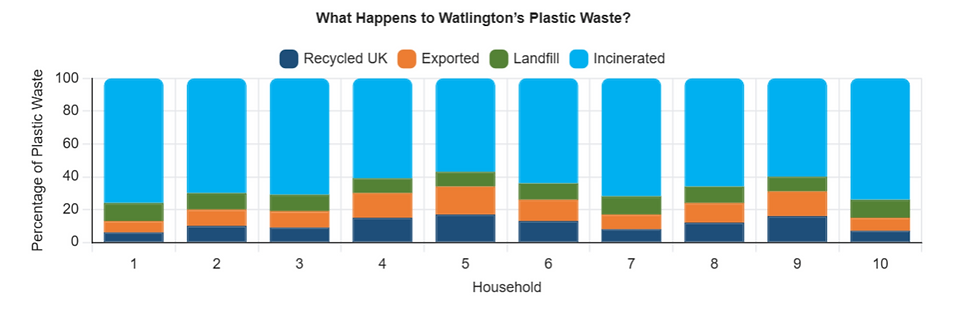
As the graph below shows, the story doesn’t end at the recycling box. The vast majority of
Watlington’s plastic waste ends up being burned, with incineration accounting for around
60–75% of all plastic thrown away. Only a small fraction is recycled in the UK, with the
remainder sent to landfill or shipped overseas — a sobering reminder of how little household plastic is truly recycled.
So where does all this plastic really go? Recycling capacity in the UK is shrinking, with 21
recycling and processing plants closing in the past two years as cheap virgin plastic and
waste exports undercut recycled material. The UK remains one of the world’s top
plasticwaste exporters, while landfill continues to leak microplastics and harmful gases into the environment. Most commonly, however, plastic is incinerated — releasing carbon, toxins and pollutants into the air and turning everyday packaging waste into a growing climate and public health issue.
As one participant put it: “It’s easy to think that it’s OK to use plastic packaging because it gets recycled — but it’s just not the case.” Importantly, what Watlington learned is that this isn’t about individual failure. It’s about a system that still wraps everyday essentials in unnecessary plastic and leaves consumers with little real choice. That’s why participants support The Big Plastic Count’s calls for urgent national action — including removing plastic packaging from uncut fruit and vegetables by2030, stopping the construction of new waste incinerators, and ensuring UK plastic waste is not exported abroad.
Here in Watlington, residents didn’t just count plastic — they acted. Letters were sent to
DEFRA calling for faster progress, and many people are already taking local steps: using our refill shop So Sustainable, buying loose fruit and veg, choosing glass bottle deliveries, and taking soft plastics to the Coop collection point. Watlington Climate Action Group continues to work towards a PlasticFree Watlington.
The message from our week of counting is clear: small communities can make a big
difference — both by changing habits and by speaking up together. Reducing plastic isn’t
about perfection. It’s about awareness, persistence, and pushing for change where it really matters.
If you didn’t take part this year, why not join next time? You might be surprised — and
inspired — by what you discover in just seven days.


Comments